
Knocks in the Dark
July 20, 2023
COBWEB: An Interview with Drum & Lace, aka Sofia degli Alessandri-Hultquist
by Randall D. Larson

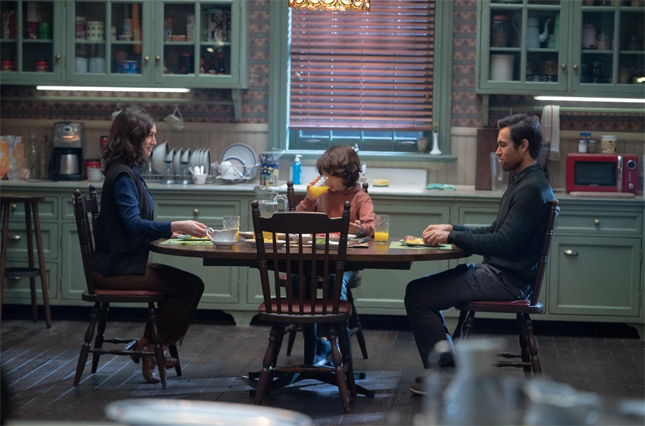
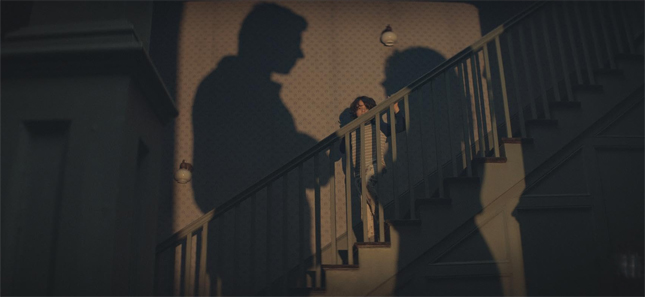
COBWEB: Horror strikes when an eight-year-old boy named Peter tries to investigate the mysterious knocking noises that are coming from inside the walls of his house and a dark secret that his sinister parents kept hidden from him.

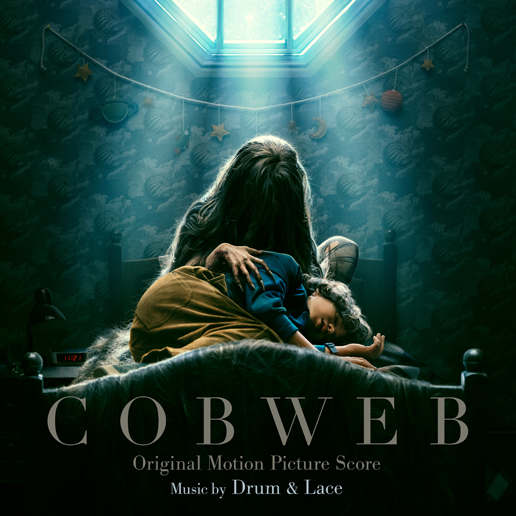
The music for COBWEB is by composer Drum & Lace, aka Sofia degli Alessandri-Hultquist (RADICAL LANDSCAPES, ROSALINE, DICKINSON, NIGHT TEETH, GOOD GIRLS, DEADLY ILLUSIONS). The opening half of the film was inspired by Amblin-esque films, and there needed to be a sound that felt somewhat traditional but a bit turned upside down. Once we get to the second half of the film, and the story is well underway, Sofia’s music flips from a fairytale-like narrative to a darker, more sinister horror sound.
Having a toddler at home, Sofia had all this “weird kid” percussion around, much of which she sampled and used to create instruments for the horror fairytale-like quality of some cues. The instrumentation is very heavy on string ensemble and string effects, as well as synths. The strings were recorded with the FAMES Macedonian Symphonic Orchestra’s 40-string ensemble. Synths were used throughout as percussive elements and drones. One synth, a low wavering subby analog bass, is featured prominently throughout the score in very specific scenes, and was meant to be a hypnotic and terrifying element to the score.
An original soundtrack release will be forthcoming from If This Then Records.
COBWEB is scheduled to be released in limited theaters by Lionsgate in the United States on July 21, 2023.
Watch the COBWEB trailer:
Q: What brought you into this project and what elements of the film’s story initially interested you?
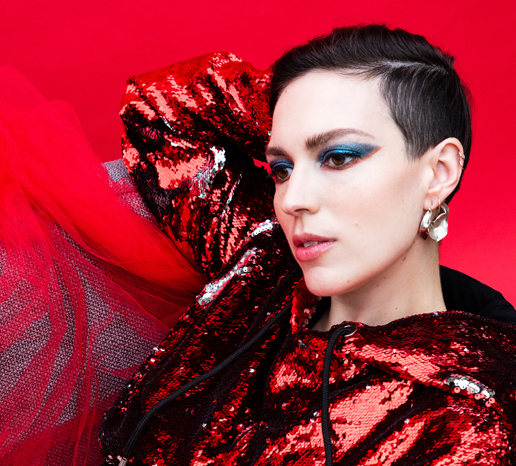
Drum & Lace: The process of the film has been a pretty long one. I originally met with the folks at Lionsgate and had expressed interest in wanting to explore working in horror – this must have been pre-pandemic, maybe 2020 – and from there sometime during the pandemic I got an email from them: “There’s this great horror script that would top the annual blacklist of scripts [an annual survey of the “most-liked” motion picture screenplays not yet produced] so they sent me the scripts and I was absolutely blown away by the script itself, and just the writing. I demo’d and I got brought on early, just because there were using more on-camera music movements that they needed a composer to do early, and also I think they really wanted to establish the musical tone of the film, early, just to help bring elements together. So I demo’d and to my surprise, and very gladly, got the project. We started working on some music before they even shot, then they shot during COVID and the movie was actually put on hold for a while, and then last Spring everything came back together and the edit and the scoring and everything happened very quickly. What really drew me to the project to begin with, was the script being fantastic, and then [writer/director] Samuel Bodin’s previous work with the Netflix series MARIANNE was maybe the most scared I’ve been in decades! Samuel had such a great way of speaking about making cinema and making this movie, and I just had such good faith that it was going to end up being really special. And I think it is – I think it’s a really cool like non-IP horror movie that’s kind of like an old-school, great story.
Q: From your own inclinations and what the filmmakers had in mind, how did you determine the musical approach that would be right for this fairytale/horror project?

Drum & Lace: We had a lot of conversations. Sam and I spoke a lot about how he wanted the first part of the film to feel like this timeless, like you said, fairytale – because the movie’s very ambiguous in how it’s shot. If there are cellphones it could very well be 30 years ago, or it could be now; it’s not set in a specific time. So we needed to try and capture that sort of childhood fear and wonder for the first half. A lot of the music that was temped or referenced was James Newton Howard and, not John Williams per-se, but kind of like that Amblin-esque sound of the ‘90s. One of the scores that I remember there, was a cue or two that was temped from LADY IN THE WATER, so that was like the first half of it. Then for the second half, they didn’t really have much temp on it yet, and they gave me free reign to just go for it. It took a bit to find the elements that really worked, but once we did, once the music took its turn, we were just going for it with electronics and a 40-piece string ensemble. The movie is just wall-to-wall crazyness!
Q: What was your musical focus on the boy, Peter, to accommodate his fear and suspense as he is troubled by strange knocking sounds in the house?
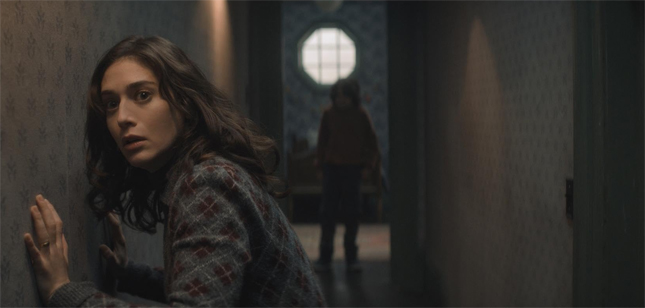
Drum & Lake: One of the things that came once when I was writing and Sam said “we never wanted any cue to feel too resolved, because there’s so much about Peter’s character – he’s young and he’s being bullied, and he’s like this very sensitive kid who then starts hearing things in the house, his parents are pretty controlling, and have to give him this sort of sense, like floating and being suspended in childlike wonder but also a terrified sort of mood, and I think musically what resonated really well was using bells and piano and vocal things. I think the consideration was to remain very sweet but also not resolving things too much and keeping tonality and chords very ambiguous sounding, but still childlike, in a way.
Q: And how did you treat his parents, musically, as we begin to question Peter’s fears…?
Drum & Lace: The way that the parents are musically portrayed, I think, is one of the big things that changes. Musically the sound that they have at the beginning, until things again take a turn, it’s a little bit more traditional, a little bit more strict and straightforward. The instrumentation, I feel like, is a little bit more low-end or like cello-y, if that make sense. It was done to contrast the higher register that Peter’s themes were in, and I think what really bridges the gap is the teacher figure, Miss Divine, whose played by Cleopatra Coleman, and I feel like she is the bridge between them. The cues that happen when she’s around tend to be sort of like an in-between of the two.
Q: I understand you brought in cellist Ro Rowan and multi-instrumentalist Jon Natchez to provide some unique sonic textures for portions of your score? How did you use these effects to add to the film’s creep factor?
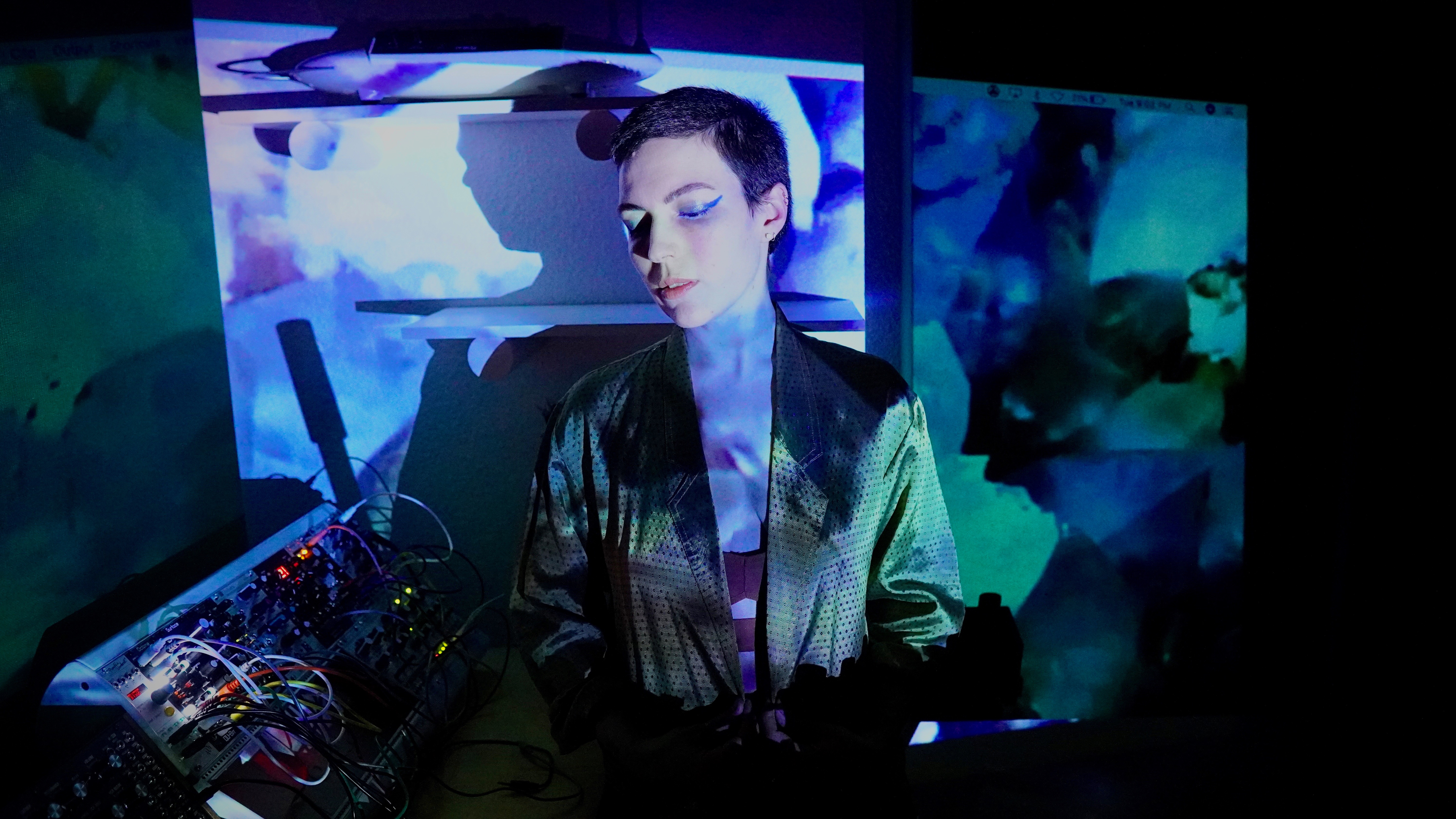
Drum & Lace: Ro and I have worked together on nearly every film that I’ve scored. When I got hired on this film, back in 2021, I had him over to my studio in L.A., and we recorded a bunch of things that I’d loosely written down – different string effects, different string bends, ostinatos and screeches – essentially building a palette of sounds that I could then go and manipulate and shape. A lot of those sounds ended up being used, some of them very literally where you can hear it still sounds like a cello, while others are manipulated so much that they sound more like textures. That all came out of one recording session that we did before started writing. It was the same thing with Jon, who I’ve known for a really long time through band worlds, he’s an extremely talented composer as well for film and TV, but is also just incredible with saxophone and all sorts of brass instruments. I asked him to do some tenor and sax swells, just because I had a feeling that the swells would be a good thing to have. Those are then very prominently featured, you can hear the swells and I think they’ve helped the score to have that signature sound that hopefully, when the audience watches, they’ll go, “Oh, what’s about to happen!” But they are both some of my favorite people to work with, and I was really glad to be able to get them on to this.
Q: How did you mix the string ensemble and string effects with your percussive synth effects and drones to drive the film’s developing fear factor?
Drum & Lace: I think, because the timbre and the tonality of the strings and everything else, all the synths and whatever, there was enough space I between the score to have them work harmoniously without stepping on each other’s toes. I mixed it as well as I could and then I had score mixer Matt Ward, who I’ve also worked with numerous times, come in and he gave it a final polish and did the 5.1 mix and everything that we needed for the sound stage. The strings were sort of mixed within the film – unless it was one of Ro’s manipulated string effects that I was placing at the front – the strings are this huge supporting factor in the background, they’re like a big hug around all the other elements! I think they provide a lot of the fullness that this movie needed considering the references and what we talked about with the filmmakers.

Q: What was most challenging, and more rewarding, about scoring this project?
Drum & Lace: The most challenging, I think, was finding the initial template. Sam had a very clear idea of what he wanted for the first pass, and it was really important for him that we’d nailed the right musical tones, since he’d spent so much time crafting the visual esthetic of it. I wouldn’t call a challenge, I would definitely just call it a part of the job and something that really felt like a true collaboration, back-and-forth. I think the biggest challenge was that the movie was put on hold for essentially a year, and then when it was finally time to come back to work on it, the timeline was very quick. When you’re scoring a film that has sixty-five minutes of score, and it’s a horror movie and not just like background ambience and whatever, so it was a lot of music to write and not a ton of time. I think was the most challenging thing. Most rewarding was just getting to really amplify some of the horror sequences and getting to do the string effects – which I’d never been able to do – like spidery sounding strings and these really high string stabs. There’s one cue – this is obviously very self-complimentary! – but it sounds very Hitchcockian! That’s something that every composer wants a project where they can have the strings do a Bernard Herrmann sort of thing, so I think that was probably the most rewarding!\
RED WHITE & ROYAL BLUE: The son of the American President sparks a feud with Britain’s prince.

Q: Another film you completed recently, and a far cry from the darkness of COBWEB, was the romantic comedy, RED WHITE & ROYAL BLUE. How did this project come to you, and what can you tell me about scoring this film?
Drum & Lace: Yes! It’s very funny that the two films I have coming out within two weeks of each other are so different! RED, WHITE & ROYAL BLUE is something that came to me, I think they were replacing a composer, so just before the Thanksgiving holidays this past year, 2022, the music supervisor Maggie Phillips, who I’d worked with on ROSALINE, brought me on and I met with Matthew López, the director and writer of the film. We hit it off immediately, and in December I moved to London, where I am currently right now, and all of the post-production for the film just happened to be in London as well, so it was kind of like kismet! I started working on that in January, and we worked through the Spring. It was a really fun and completely different mood from COBWEB. This film is a romantic comedy with some drama and it’s such a heartfelt love story that it called for exactly the opposite of COBWEB – where instead of a string effect it was about creating these lush, beautiful chords and structures. I had the London Contemporary Orchestra record the strings at Air Studios here in London. The great thing is sort of what’s happening this weekend, COBWEB comes out on Friday and so does BARBIE and OPPENHEIMER, and I feel like I sort of have a BARBIE/OPPENHEIMER situation with my two movies, because it’s kind of like a little bit of something for everyone! What’s great is that I’m hoping COBWEB will open the doors for a new audience and a new genre for me to try to work in, whereas RED, WHITE & ROYAL BLUE was quite comfortable because it felt like a very sort of logical segue to DICKINSON (2019-2021) and to GOOD GIRLS and to ROSALINE and all these movies aimed for a younger LGBTQ audience. So I love that these are the two things I have coming out at the same time.
ROSALINE (2022): A comedic retelling of Shakespeare’s “Romeo and Juliet,” told from the point of view of Romeo’s jilted ex, Rosaline, the woman Romeo first claims to love before he falls for Juliet.

Q: I really enjoyed watching ROSALINE, a wonderful comedy and twist on the Romeo & Juliet story. How did you and Ian Hultquist create the kind of score this project needed?
Drum & Lace: ROSALINE was so much fun to work on, too! We wound up having it be sort of like a pop-synth contemporary score but then we also used a string ensemble and some actual renaissance instruments, so the result is we called it a renaissance pop situation. There were these wooden flutes and harps and harpsichord, but then they mixed so seamlessly with synthesizers and modular synths, and my voice is very prominently featured in ROSALINE, and I feel like the approach for that movie sort of opened a lot of doors for us – like, I never thought I would be writing for harpsichord and those instruments! But there we were with a cover of Robyn’s “Dancing on My Own” with all those elements. The biggest bummer with ROSALINE is that it is one of those movies that was taken down from Hulu and Disney about a month and a half ago. So I am hoping that other folks will be able to enjoy it if it ever ends up on another service.
THEY/THEM (2023): A group of teenagers at an LGBTQ+ conversion camp endures unsettling psychological techniques while being stalked by a mysterious masked killer.
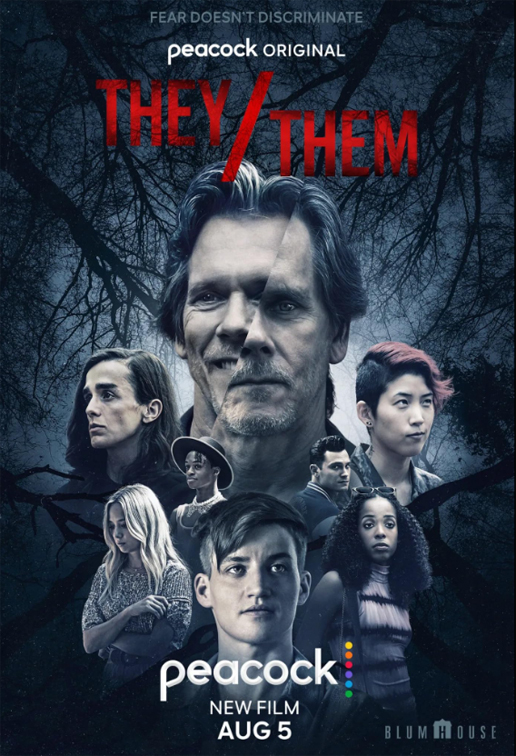
Q: Moving back into the mystery/horror genre, what can you tell me about scoring last year’s THEY/THEM for Peacock?
Drum & Lace: I was working on THEY/THEM sort of at the same time as COBWEB, actually, because of COBWEB’s coming back around with such a quick turn-around, but THEY/THEM was another instance where I was brought on very early, because the director of that film, John Logan, was a playwright and it was his directorial film debut – and I think he also had this approach of wanting to have all the elements in place so that he could have music to play on set. So that’s what we ended up doing. I had a wonderful meeting for the project – again, you always sort of know when a project is meant to be because you have these meetings and something just clicks with the filmmakers, if that makes sense – so that’s sort of what happened with John Logan. Then we worked on a suite or two; he would play them on set and also, as somebody who really acknowledges the need for acceptance, diversity, are more LGBTQ stories, everything just felt like such a powerful statement to have this slasher film that has this really strong LGBTQ sentiment. For that one, too, there were a lot of string effects – but it’s a different type of horror. THEY/THEM was more of the suspenseful horror whereas COBWEB was a kind of gruesome horror. I worked on I KNOW WHAT YOU DID LAST SUMMER with Ian the summer previous to that, so between those things and now COBWEB I’m hoping that horror can become an alley that I can keep going towards, because I really enjoy the genre. Working musically on the genre is really fantastic.
Q: What’s coming up next for you that you can talk about?
Drum & Lace: You know, I finished RED, WHITE & ROYAL BLUE this Spring and I worked on a pilot that, as far as I know, didn’t get picked up but was getting shopped around, but now I think everything’s on hold [Writer’s Guild strike], so I actually don’t have any film and TV stuff lined up right now – so I’ve been taking the time to work on my second full-length record. That’s is going great because I’ve been treating it like a full-time thing. I’m four-weeks in and starting to see the light at the end of the tunnel, so I think my next few weeks and months are just going to be focused on my own personal music, which I think is really important for me because that’s how I discover new sounds, new instruments and palettes, and expand my own musical world, so that then I can apply that to scores as well. It’s actually very exciting to have a little bit of time off with everything slowing down in Hollywood right now.
Special thanks to Kyrie Hood at White Bear PR for facilitating this interview, and to Drum & Lace, aka Sofia degli Alessandri-Hultquist for taking the time out to share her recollections and enthusiasm for these projects. For more information about the composer, see her website here.




 Musique Fantastique