
Taking A Quantum Leap
May 30, 2023
From The Arrowverse to Quantum Leap – Interview with Daniel James Chan
Interview by Randall D. Larson
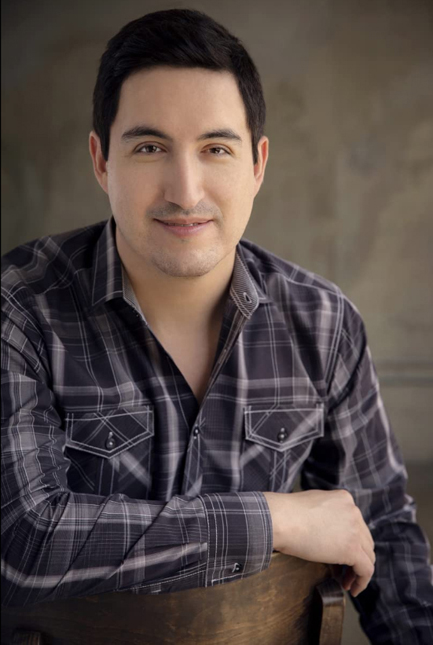
Daniel James Chan composes music for film, television, and other media. He has participated in several esteemed music workshops, including the ASCAP Film Scoring Workshop and the Aspen Music Festival and School. Before making Los Angeles his home, he earned degrees from the University of Southern California, Southern Methodist University, and the University of North Texas.
Currently, Daniel composes the music for NBC’s QUANTUM LEAP. Previous series credits include scores for SUPERGIRL, DC’S LEGENDS OF TOMORROW, ABC’s EMERGENCE, and the Warner Bros. Animation series FREEDOM FIGHTERS: THE RAY. Daniel has also contributed additional music to ARROW and THE FLASH. Notable film credits include THE ODD WAY HOME, MONSTER IN A HOUSE, and the award-winning JOSEPHINE AND THE ROACH. Daniel is equally passionate about composing music for the concert stage. Performed works include Aetheris (for horn, strings & harp), Generations: Concerto for Violin & Orchestra, Swimming Light Fanfare, and Overture for Comic Book Hero.

Q: How did you get involved with Blake Neely as an additional composer in The Arrowverse?
Daniel James Chan: I met Blake when I went to USC. They have a scoring for television and film programs and at the time he was teaching a class there, so that’s how we initially met. Following that year, he hired one of my good friends from the program as his assistant, so I knew what was going on with them. As they got more and more work, they were expanding the team and doing recording with orchestra. Blake had remembered one of my strong points was working with orchestra and orchestrations, so he asked me to work with him on something. That let to eventually working on the pilot for THE FLASH, and since that was going to be recorded, I orchestrated for them. And then, of course, the budget changed, and they didn’t record the rest of THE FLASH on a weekly basis. When SUPERGIRL came along there was thought that it would also feature a live orchestra, so we orchestrated the pilot and then that budget went away again! But he was doing more shows and he said “You know, I forgot that you’re a composer. I’ve just been using you as an orchestrator – how about seeing if you want to do some of the shows?” That led to me writing on ARROW, FLASH, and SUPERGIRL, and then LEGENDS OF TOMORROW came a little bit later, but by then I was working on four shows with the whole team. That was how it started. I thought it was a great job, just bouncing from show to show, with a lot of work. It was fun to be in a community where we were all in it together. We were our own little team.
And then we got to do some recordings here and there – we would occasionally get budgets. The first big one was for THE FLASH musical, which was a big undertaking and when LEGENDS came along that’s when we really got to get little groups here and there, gradually building up to some larger groups. Then when it got to the third season of SUPERGIRL and LEGENDS, that’s when he said, “would you like to be co-composer on this and take point on some of this?” And I said “sure,” and that was the origin of all of that!
Q: Any specific scenes that you composed on those two shows that remain in your mind?
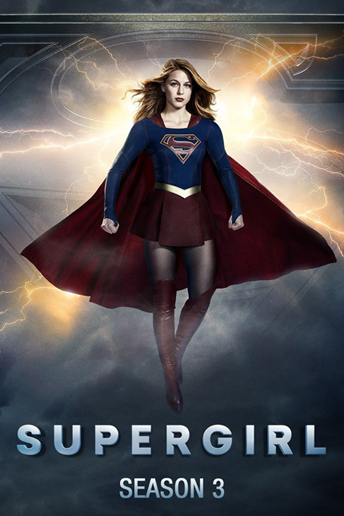
Daniel James Chan: Oh, wow! There were so many. SUPERGIRL was a more straight-up superhero story mixed in with the interpersonal drama of her friends, and that one was great because you could take big, broad traditional approaches to things, mixed in with bit of electronic elements and a more modern sound. Along the way, especially in Season 4, they started wanting original songs that the writers would do lyrics for, and then I would do the music. That became a whole other world to me. I had done a few songs here and there, some arrangements, but it wasn’t something that I was looking to do, but this show just opened up that world and I think once the seven years were done, I think we did 23 or 24 songs! That was a wonderful experience – so different, working with lots of different musicians and seeing what they could do, looking at different singers, working with the cast, but really working with writers more closely. It gave me more appreciation of their process and vice versa. They were so much more connected to the music than maybe in other shows that don’t have musicals episodes. I can’t say enough good things about my experiences with that, especially on LEGENDS.
Q: How did you get assigned to the limited Arrowverse series FREEDOM FIGHTERS: THE RAY?
Daniel James Chan: That came along in the middle of a busy, busy time. Blake had done the previous one, VIXEN, with Nathan Bloom, and he just wanted to see if I was interested in THE RAY, mainly I think, because he was kind of busy and he wanted to keep it in the family. We knew at the time that it was going to involve a lot of his themes for the characters of Arrow, Flash, possibly Supergirl, definitely, Vixen. So, it just made sense that someone in the studio did it, and he asked if I would. We’re taught not to say no, and it just sounded fun, so that’s how that got started.

“I had a general description of what they wanted to do and then of course I looked at some of the comics just to see how this character had been treated and what’s the general sense,” Chan said. “It had that retro, sort of like a Rocketeer, design for the main character’s costume. It was bright and he had powers of light, so it’s clearly not going to be a dark, brooding Nolan-esque superhero concept. I wanted it to be bold and hopeful and joyous. That inspired the way his theme came about, underneath within the typical flairs of what we had been doing in the Arrowverse, so it feels like it belongs.
5. How did you come up with the theme for The Ray, and how did you use it as a hero’s theme throughout the episodes?

Daniel James Chan: I had a general description of what they wanted to do and then of course I looked at some of the comics just to see how this character been treated and what’s the general sense, and it was just so interesting that it had that retro, sort of like a Rocketeer design for the main character’s costume, and I loved that and I loved that it was bright and he had powers of light, and I just thought, it’s clearly not doing to be a dark, brooding Nolan-esque superhero concept, I wanted it to be bold and hopeful and joyous. That inspired the way his theme came about, underneath within the typical flairs of what we had been doing in the Arrowverse, so it feels like it belongs. I’m really proud of that one, it has a lot of emotion, it’s really malleable to suit the action or the more emotional scenes or somber moments. I really got a lot of use out of it. Then we were able to bring it into the live action shows when we did big crossover event, because the character came in on live action and we were able to bring over that theme as well as Overgirl’s theme and some of the other Reischmen [the Justice League from Earth 10, upon which Nazi Germany has won World War II] music, so that was really nice to not only have it live in the animated world but in the Arrowverse.
Q: Were there other themes you created for this series?
Daniel James Chan: We had these twisted versions of characters’ counterparts, so Arrow has a dark version of Blake’s Arrow theme, for The Flash I would do things to his theme, and the Ray had his more heroic part, and his B-theme was a more emotional section. There was a theme when The Ray goes from the prime universe to this Earth-X universe and sees it for the first time, and that has a tragic, operatic kind of theme.

7. How did the limited length and duration of the show affect how you were scoring the episodes?
Daniel James Chan: I’m actually very grateful that we did it in these short episodes, because it was original a web series that they were then going to then string together to form a feature length movie, so it was basically in five-minute chunks. I was grateful for that because I was doing the other two shows at the time, and we were doing the crossover episodes! I was very happy that we were doing it piece by piece. They structured it narratively, so that it made sense to break here and come in here. The thing that caught me by surprise – I don’t think I’d done anything in animation at that point – and when they sent me their cuts there was no temp music! There was no music that they placed in to give a sense of what they wanted or where they wanted it. It was kind of all on me to decide where are we starting, where are we going, what does it sound like? So that was an interesting part of the process that is very common in animation. You’ll have a spotting session with the creatives where they tell you where and when, but it’s not nearly as specific as the shows for the CW were.
Q. How did you get involved in the new QUANTUM LEAP series?
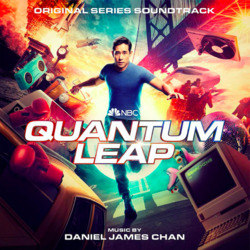
Daniel James Chan: Blake made an introduction to Martin Gero, who became the showrunner for QUANTUM LEAP. When the first episode was being worked on, he wanted to see if this was something that I could do for Martin, and if Martin would like what I was doing. I think it was the work on LEGENDS that made Blake think I would be a good fit for what Martin was looking for, because it was going to have a different sound, potentially, each week, and he knew it would be a challenge. So, I did some scenes and then we did the first episode and then that was that. It happened very quickly, and it was a very intense short period of time.
Q: How would you describe your new main theme for the series pilot?
Daniel James Chan: I would describe it as… short! They didn’t do the typical minute-plus main title like the original show – I think the main title is six or seven seconds, so there was almost no time to do anything. We had to do a very short four-or-five-note idea that would give you a sort of sense of scale or scope that this was going to be a bigger, epic adventure for the main character. But that has its plusses and minuses. I know a lot of fans miss the Mike Post theme, but we also knew something like that wouldn’t really work for this show. It would just feel very disconnected, I think. I try to work that in, when I can, to the score itself and I try to expand on it a little bit. I think you get more of it in some of the recap movies – or what they call the Saga Sell – and that gave me a chance to develop it a little but more. I guess you would call that a more modern approach to TV.
Q: I understand there are a few references to the original show and its music popping up in this new series?

Daniel James Chan: There have been a few scenes from the original show used in the recaps. I think in some of the Saga Sell moments where they’re talking about fans, but also for the character of Magic [“Magic” Williams, head of the Quantum Leap time travel project, and a Vietnam War veteran who Sam Beckett leaped into in the series’ Season 3 1990 episode “The Leap Home (Part 2) – Vietnam”]. It was episode 3, where you realize he’s a character from the original show and they show the footage of how Sam effected his life. It was in Vietnam and from that episode… So, they do bring that in. And then we did quite a little bit of the original theme in that same episode 3 – when you see the original handlink that was used to access Ziggy (the self-aware artificial intelligence from the original show), and we thought it would be a nice little Easter Egg to put it there. I think the show itself likes to make as many of the connections as possible.
Q: What’s been your musical palette on this new series – and are you shackled with a digital orchestra or are live instruments sometimes involved?
Daniel James Chan: Unfortunately, yeah, digital samples, for several reasons – but time is probably the biggest factor. Things have to happen so fast; things have to get approved, and it’s a lot of music. Each episode comes in around 42 minutes of run time, and it wouldn’t be uncommon that there’s 40 minutes of score! So, doing that over 18 episodes is a little bit of a grind! We do record things where we really need to, or when I tell the producer “Oh, we’re going to do the Western? Ok we have to have guitar; we have to have fiddle! That just has to be there!” So, for that I brought in some collaborators I’ve worked with on LEGENDS – George Doering and Camille Miller – and that’s always Christmas for me; I love working on Westerns. Then, occasionally, if we need small string groups, we’ll bring those in as needed.

Q: How has the technology of digital music changed since you started in the Arrowverse with what you have now? You still have to rely mostly on digital samples, but how has the opportunity to develop a digital orchestra now that it was when you started?
Daniel James Chan: Absolutely. The sample libraries – there are so many more companies now, and they’ve responded to what composers have needed or wanted, so that the choices are everywhere. You can control things, especially in the strings, you can get all sorts of different articulations that, when I started out, might not have been there or if they had, would have been very limited. The way they’ve recorded it reflects modern mix sensibilities, which really help. The cost is so much more affordable now than ten years ago. And computers now respond so much better; so, you can load up so many more things in your palette and you’re not going to have to sit there and wait for the spinning ball!
It’s a double-edged sword. I love working with live orchestras. That’s why I signed up to do this career. The best seat in the house is when you’re standing up in front of one. There’s just no other feeling. That’s always the goal for me. I don’t ever suggest not using live players, but at the same time I’ve come to really enjoy working in the box, so-to-speak. You can get details, you’re mixing as you go, so you know that your end result is basically there, and you don’t have to worry about the next step. And then mixing – I do love complimenting it with synths and electronic elements, which really opens up possibilities. The sounds can be so inspiring, and they can help you if you’re stuck, or they can make you go in a different direction. They can make you feel like, oh I don’t need to lean on the orchestra – the orchestra can be the counterpoint to this really cool electronic thing I’ve got going on, or a percussion thing I’ve got going on. So that’s been nice, to have that mixed world.

Q: What other themes or motifs have you composed for the new series?
Daniel James Chan: What I would call their longing theme… I guess you could describe it as a love theme between the two main characters, Ben Song and Addison Augustine, they are the show’s emotional core, because they’re never together. There have been so many obstacles, and it’s one of those relationships where you feel like, the moment they actually get together, the show’s probably over! So, you’ve got to stretch this out. It’s a very simple longing, it has a piano-type electronic sound that’s a little bit broken or has a shattered quality, which captures the schism that’s there between them. That’s one of the central motifs, and then the one that you might hear on the end credits is when he first starts to leave, at the end of the first episode, it’s this building, rising, kind of more hopeful theme, and that’s like he’s trying to get home to her. That’s probably my favorite one on the show. There are other themes, for the villain in the first season, another primary character in the first season, Janet; she has her own theme. That’s something that I hope to expand upon as the other characters in the headquarters are developed – I hope to get characters, as I see how they’re being used, give them some more concrete thematic material.
Q: Any further thoughts about being involved in the new QUANTUM LEAP?
Daniel James Chan: It’s really a privilege to work on the show. I love how it’s not a straight-up reboot and how it is a sort of continuation of the show from the ‘80s/’90s, and something that I would see as a kid, and something that definitely resonated with me a lot of those tough lessons and harsh situations that Sam would be put in. It might have been the first time that I was exposed to that concept, or to that situation, so to be connected to that world and the thought-provoking morality play aspect to the show is really great. And then you have the people that are making it, just seem like really great people, they respect what I do, it’s a privilege to be on a show like that – also on a network show. That’s just wonderful, the promotions they do for it, so it’s been great.
Thanks to Daniel James Chan for taking time out to chat with me about his film music work.
For more information, see Daniel’s website here.
Watch the trailer for the new QUANTUM LEAP:




 Musique Fantastique