
We’ve Got To Find Our Way Out…
June 29, 2023
Ian Hultquist – Scoring THE WALKING DEAD: DEAD CITY
Interview by Randall D. Larson
THE WALKING DEAD: DEAD CITY is a new streaming series available now on AMC and AMC+ that follows Maggie (Lauren Cohan) and Negan (Jeffrey Dean Morgan) traveling into a post-apocalyptic Manhattan cut off from the mainland in search of Maggie’s kidnapped son, Hershel. The crumbling city is filled with the dead and denizens who have made New York City their own world full of anarchy, danger, beauty, and terror.

Ian Hultquist (ROSALINE, I KNOW WHAT YOU DID LAST SUMMER, NIGHT TEETH, GOOD GIRLS, MILLENNIAL MAFIA) has composed the score, using strings, drums, synths, and a variety of special instruments. The music is dark and industrial, using sampled organic and environmental sounds. Recorded in abandoned warehouses and various other deteriorated areas, these sounds include banging on pipes, vibrating grain silos, playing instruments such as brass and guitar sounds and repitching, looping, and reverberating them in the studio. “[I had] a few friends design samples and sounds specifically for the show,” said Hultquist.
Watch the series’ trailer:
Q: THE WALKING DEAD has a rich history on television from its eleven-season run and a number of offshoots or spinoffs. With DEAD CITY, how are you bringing your own musical inclinations to this evolution of the franchise, while recognizing the sonic tradition of the long-running series?
Ian Hultquist: One of the big first ground rules that we laid when we started talking about music for the show was to try and not sound anything like the shows before it. We really wanted this to feel like a fresh and new take on the franchise. We didn’t want to bring over any existing themes that they’d had before for other characters that might be continued on in this. So we had a brand new playing field, with some limitations in terms of what not to do. But one of the big things that we knew we were going to do, off the bat, was to have it be a very synth-based score, which hadn’t really existed too much before in the other shows. One of the big inspirations that we had for this, at first, was John Carpenter’s ESCAPE FROM NEW YORK. It evolved past that; it became a more eclectic pallet than just sticking to ‘70s analog synth, but that was the initial jumping off-point for us.
Q: When did you come onto the project and how much time did you have to develop your instrumental palette across the series’ six episodes?
Ian Hultquist: I actually came on before they’d even started shooting. All the scripts were written, they were already in pre-production, and they were pretty far along in terms of what they wanted to do with the story. I was part of the team that created a united front with all the heads of departments – art department, cinematography, direction, myself as music. We presented a creative direction to the president of AMC before we started production on the show – which was a fun day and a little nerve wracking! When I first got hired, I actually wrote a ten-minute suite of material to start hashing out character themes and figure out the sound palette. That would have been last summer, a little under a year ago. And then from there I was on hold for a bit until I started getting episode cuts. That’s when I started diving in. I think, for me, a lot of my development happened as I’m doing it, because I feel like you can spend as much time as you want developing something but if it doesn’t work when you get the picture, then you’ve got to change it. So the way I work is like it’s all happening at once – which might be a bit chaotic but it’s what works for me. Once we actually had picture, even though we had that suite as a starting point, we went through a lot of experimentation and exploration and really started building up a much beefier and more open sound.
Q: Your main title theme is an aggressively dominant percussive motif. Would you describe how that came about and its use throughout the series?
Ian Hultquist: When I first got the main titles, to work on it, I actually went a complete different direction, at first. I wrote something that was kind of mournful and sad, because I was thinking about the opening of the show and what happened to New York City, and how the city crumbled and then it slowly started coming back to life in a weird way. I think my first original pitch was like an ode to New York… I think it was a pretty piece but it really didn’t have the excitement and intensity that they were looking for. So I went through a couple different rounds and couldn’t quite figure out what the right thing to do was, and then I actually went back to the original suite that I had written. One of the themes in that suite was that da-da-da-da-DA-DA, da-da-da-da-DA-DA – so I tried placing that in the main titles and something started to click for me. We developed it a lot more, we put in some changes, we embellished a more groovy arrangement, I had some string player friends of mine brought in to give a livelier edge. That was one of the initial ideas that actually did see it through to the end, magically!
Listen to Ian Hultquist’s Main Theme from THE WALKING DEAD – DEAD CITY:
Q: How did you treat Maggie and Negan, musically?

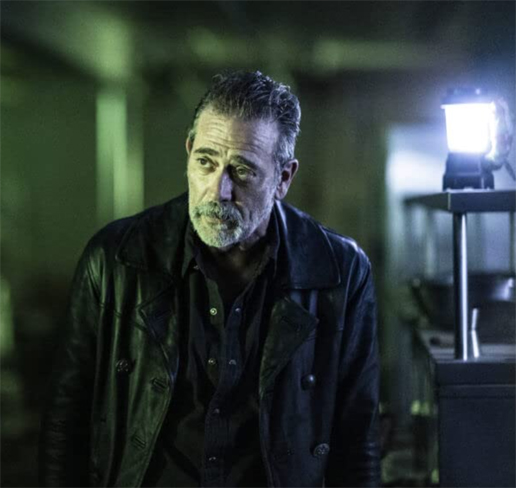
Ian Hultquist: It wasn’t until towards the end of the show that I realized that any time I was writing for Maggie, her scenes were always how she was in conflict with other characters. There’s no standalone Maggie theme this season, really. It’s always Maggie in her conflict of being a mother of her angry teenage son Hershel, or Maggie dealing with her intense trauma of losing Glen, that’s so fresh and real for her. Things like that; whereas Negan does have a proper theme that actually gets to evolve as the season goes. We definitely see a bit more of the old, dark, evil Negan putting on a show and tearing people apart in very operatic ways, so I have this dark, descending piano motif that really plays into that for him. But then, Negan is such an interesting character this season because we really learn so much more about him, and we see this other side to him. We learn that his reasoning for what he does is because he feels like he has to protect those he cares about; he does it out of safety. He makes such a show of it because it scares people and he knows they won’t go after him, or his people. When we get to the very end of the season – I won’t spoil what happens – Negan’s theme comes back in a very beautiful and suite and sad way. My goal is to make you cry over Negan, in a way. I really wanted to push how we feel about that character, and I’m curious to see how it plays.
Q: Your musical treatment changes somewhat when Maggie and Negan arrive in New York City, and have some new dangers to face. How did your musical palette and tone shift in this environment and accommodate the challenges these characters face in the zombie-infested ruin of the Big Apple?
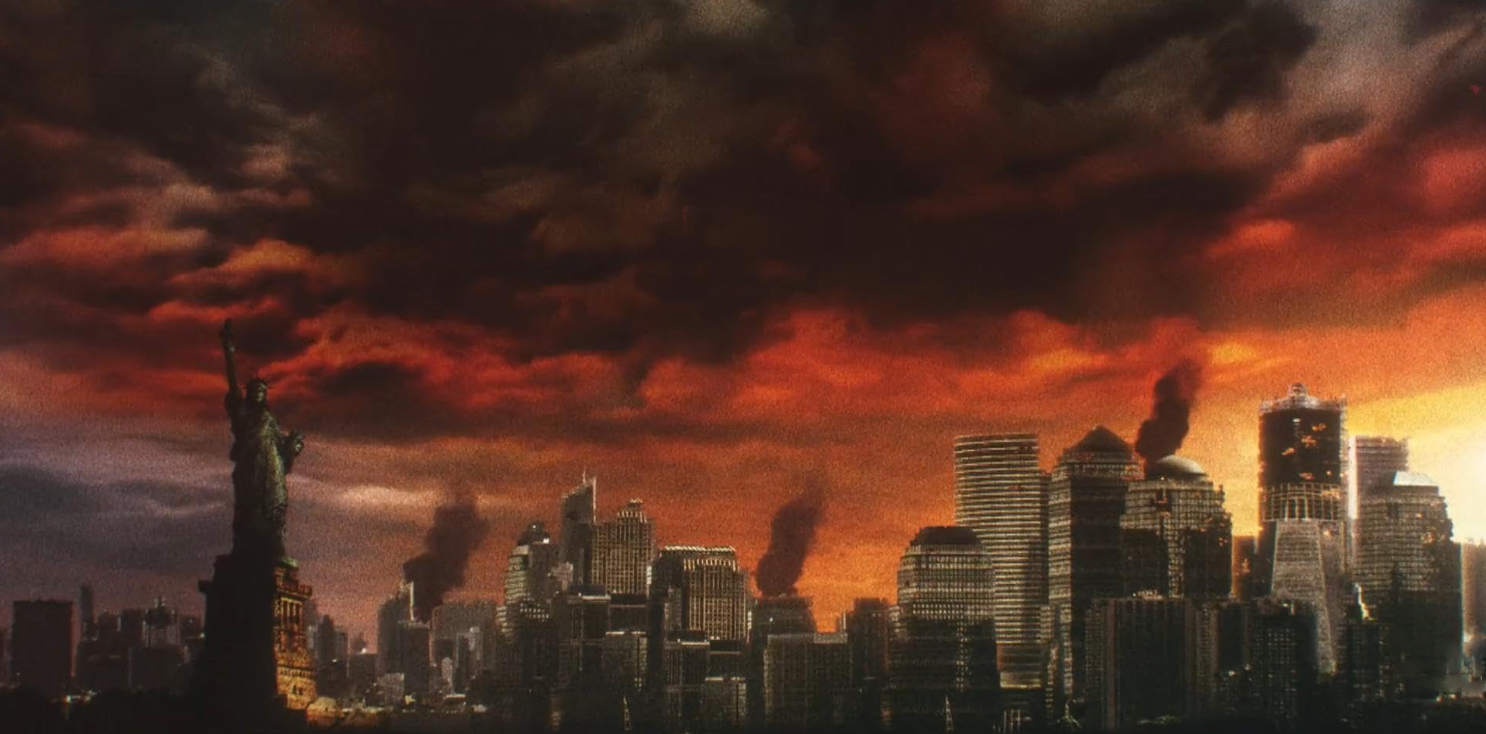
Ian Hultquist: I think that’s where you first hear the synth parts of the score take over. When we first meet up with our characters we’re still in a rural area. We don’t know exactly where, but it feels a little familiar to those who’ve watched the original show. And then when we get to New York it’s this place that none of our characters have really been before. Negan says he’s literally never seen it before, in person, and on top of that it’s not just New York that we’re seeing, but it’s Manhattan that’s been living in the apocalypse for fifteen or so years. So we wanted it to feel completely alien to them, like a sound that we’ve never heard in the show before, because they’ve never seen these gigantic skyscrapers that are falling apart with vines and things going everywhere. So that’s really where the John Carpenter-ess synth starts to play.
Q: You mentioned the string players. In addition to your use of electronic and sampled sound designs, you have a few musicians credited on the score – how have you mixed these players in with your musical sound design?
Ian Hultquist: The string players I mentioned only played on the main title, but I did have other people help me out on the score of the show, actually doing a lot of synthesis, sample design, and field recording. The primary one was my friend Ben Van Vlissingen, he’s worked with me a bit here and there the past few years, and he just had such an enthusiasm for finding sounds and sampling and going out into crazy areas to gather noises. He was on a family trip in Maine and he went out to this abandoned supposedly haunted warehouse with a few friends, and just captured the most terrifying ambiances of these building, where they would bang on the walls, bang on silos, find long echoey tunnels and send signals down into them and record that. A lot of those terrifying sounds crept their way into the score in different ways. I would take those and then prostitute them further, either playing them at half-speed or putting distortion or delays on them. And then I also had my friends Anthony Baldeno and Xander Singh, who created some drones and sudden boom hits – stuff like that, just to make sure we’re using things that are custom to the show and don’t feel like something else.

Q: What are some of the other sampled organic and environmental sounds and textures you are using throughout the series?
Ian Hultquist: I definitely used quite a bit of baritone guitar, mostly using an eBow on it, which is this little device that vibrates the strings to create drones. Actually there’s a few moments throughout the first season where I get really heavy distorted guitar riffs happening, which is really fun to do; they haven’t gone too much in the score before. I also used my Guitarviol, which is this instrument that’s a cross between a cello and a guitar. It’s very difficult to play well, for me at least, so I actually play it not-well, but it works! Maggie has a few nightmare sequences and we just give these horrible screeching strings and that’s coming from there. And then I also have a synthesizer called a Therevox, which I absolutely love. It’s kind of a new take on an ondes Martenot, which is this old French instrument where you would put your finger in a ring and slide up and down the keyboard to control the pitch. That’s such a beautifully made synthesizer. It’s very simple but it’s so powerful in the performance of it, so there’s quite a few layers of that throughout the show. It shows up in more and more as the episodes go on because as things get more haunting and crazy it really helps add to that whole vibe.

Q: Without revealing any spoilers, what can you describe about your music as it ramps up toward the end of the season?
Ian Hultquist: It’s a bit of a roller coaster. It just gets more intense and ambitious. The drums get louder and the base gets louder. The string effects get scarier and scarier. It’s funny, because a lot of the show really is a drama; it’s these characters dealing with their trauma and trying to make their way through this insanely depressing world that they find themselves in. But there are moments where it’s definitely just terror and action, and it’s really fun jumping back and forth and playing into both of those.

Q: What did you find was most challenging – and/or interesting – for you about scoring DEAD CITY?
Ian Hultquist: Honestly, I think the moments of dialog that I’m underscoring, are definitely a challenge because you don’t want to overdo it with melody. At least not in this show – other shows might go nuts with the melody there. I think the writing on the show’s so beautiful and there’s some really gorgeously acted moments between Lauren Cohan [Maggie] and Jeffrey Dean Morgan [Negan], and we really wanted to let that shine through. So finding a way to have score support that and still be interesting but without overstepping into what they’re saying, I think was definitely one of the big challenges. At least for me, because I find those moments really special, and it’s easy to just kind of slap something on it that maybe doesn’t have much musicality to it, and also just might not be really serving what’s happening. So that would definitely be something that stands out.

Q: Now, I wanted to ask a little bit about a previous project you did, ONE OF US IS LYING, a 2021–2022 mystery thriller TV series. What can you tell me about scoring that?
Ian Hultquist: Oh man, thank you. I’ve got such a place in my heart for that show because it got cancelled before we could to a third season. But that was a really sweet show to work on. It was a new take on a high school murder mystery. It was cleverly done; there were so many twists and turns to it. The score was super-fun to write – definitely very synth heavy, in a bit of the Cliff Martinez world at times, because we wanted to really make it feel like a thriller and action-y, but we found so many moments that had comedy and lightness, especially in Season 2. I feel we really got to develop it more and the character themes just became stronger and stronger. I loved my time on that show, and everyone I got to work with, too – Erica Saleh, the creator who took over as showrunner for Season 2, was such a joy to work with. The music editor that I worked with primarily, Zak Millman, is who I brought on for DEAD CITY. He’s worked with me quite a bit at this point.

(Photo: Ben Zales)
Q: What do you have coming up next that you’re able to tell us about?
Ian Hultquist: I finished a film just recently, it doesn’t have a release date yet, but I’m hoping it will soon. It’s called TURTLES ALL THE WAY DOWN, it’s based on the John Green novel, and it’s directed by Hannah Marks, an amazing director/actor. I’m really, really proud of my work on that film. I think the film itself is really gorgeous and sweet, and I am just eagerly waiting for us to get news on that.
Q: Are you able to say anything about the music?
Ian Hultquist: The score is very personal for me. In a way, it almost sounds like if I did a solo record. I think it’s completely different from what you hear in DEAD CITY. Obviously DEAD CITY is it’s own animal; with TURTLES, I really wanted to try and tap into some really sweet emotions with the music, and I pulled from my personal life a bit. It has strings, it has synths, it has guitars; it’s almost like an indie-pop record in a way.
The 20-track soundtrack album for THE WALKING DEAD – DEAD CITY is available digitally at these links.
Special thanks to Kyrie Hood at White Bear PR for facilitating this interview.
See my previous interviews with Ian Hultquist about scoring NIGHT TEETH and I KNOW WHAT YOU DID LAST SUMMER (both 2021), in my November 2021 Soundtrax column and AT THE HEART OF GOLD: Inside the USA Gymnastics Scandal (2019) in my July 2019 Soundtrax column




 Musique Fantastique